Home › Services
Sealcoating, honestly
Sealcoating is a genuinely useful surface treatment and the most oversold product in the trade. Both things are true.
What it actually does
Sealcoat is a coating applied over sound asphalt. It is not asphalt, it is not structural, and it adds no strength to the pavement.
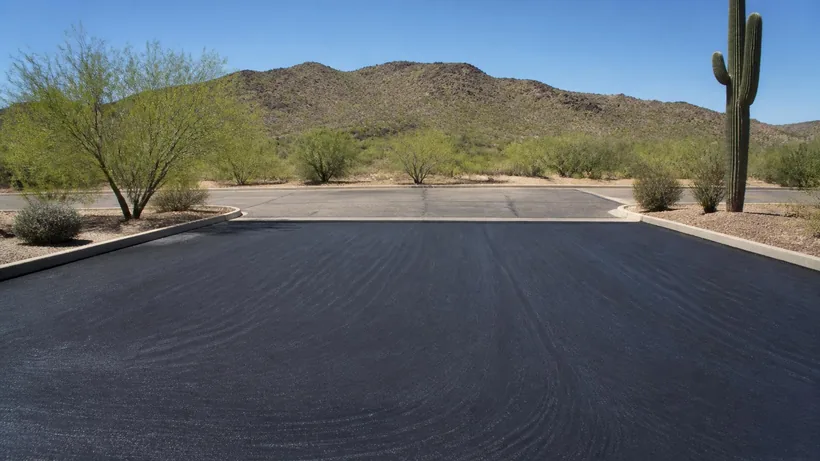
What it does is slow the process that ages Valley asphalt fastest. Ultraviolet exposure oxidizes the binder that holds the aggregate together, making the surface brittle and eventually causing it to ravel and shed material. A sealcoat takes that exposure instead of the pavement.
It also resists some chemical damage — fuel and oil drips that soften asphalt binder — and it restores a uniform dark appearance, which is the part everyone actually notices.
On a sound surface in this climate, that is real value for modest money.
What it does not do, at all
- It does not fix cracks. It will not bridge them, and they will reappear through it.
- It does not fix potholes or any other structural defect.
- It adds no load-carrying capacity whatsoever.
- It does not correct drainage or grade.
- It does not stop alligator cracking, which is a base failure and indifferent to anything applied on top.
This matters because sealcoating over a failing lot is the most common way commercial property money gets wasted on asphalt. The lot looks considerably better, the deterioration continues at exactly the same rate underneath, and the next inspection is a worse conversation than it would have been.
How often, really
Sealcoating is sold on a schedule and it should be decided on condition.
Over-sealing is a genuine failure mode. Repeated applications build film thickness, and thick sealcoat cracks and peels on its own, which produces a surface problem where there was not one before.
The honest answer is that the interval depends on exposure, on traffic, and on how the surface is actually doing. A lot in full sun with heavy traffic is on a different cycle from a shaded, lightly used one, even on the same property.
And the threshold question comes first: is this surface sound enough to be worth protecting? If the answer is no, the money belongs on structural repair and the sealcoat conversation is premature.
Preparation decides the result
Sealcoat is a coating, and coatings are only as good as what they are applied to.
The surface has to be clean — dust, dirt and loose material removed properly, not just blown around. Oil and fuel spots have to be treated, because sealer does not bond to contaminated asphalt and will fail in exactly those spots first. Vegetation in cracks has to be dealt with. Cracks that are going to be sealed should be sealed before, not after.
A cheap sealcoat job is usually cheap because of what was skipped in preparation, and the result is visible within a season as patchy adhesion and early wear in the traffic lanes.
Sequencing
- Fix drainage, if water is standing or getting into the base.
- Repair structural failures — alligatored areas, failed base.
- Seal cracks.
- Resurface if the surface condition warrants it.
- Then sealcoat, if the surface is sound and worth protecting.
- Stripe last, because sealcoat covers paint.
A proposal that leads with sealcoating on a lot with visible structural distress has put the cheap, visible item first. It is fair to ask directly whether the base has been assessed and what the drainage is doing before agreeing to it.
Timing in the Valley
Sealer needs surface temperature within a workable range and time to cure before traffic returns, which in a Phoenix summer means scheduling around the hottest part of the day rather than avoiding the season.
Cure time before the lot can take vehicles is a real scheduling input and varies with conditions. It is worth agreeing in advance, because a lot reopened too early marks up and the appearance benefit — which is most of the point — is lost.
Phasing applies here as everywhere: most commercial sites seal in sections so the property keeps operating.
Sealcoating, honestly — common questions
Is a cheaper sealcoat quote a false economy?
Usually the difference is preparation — cleaning, treating oil spots, dealing with vegetation in cracks — and that is what determines whether the coating bonds. A cheap job shows itself within a season as patchy adhesion and early wear in the traffic lanes.
Does sealcoating make the lot hotter?
A fresh dark surface absorbs heat, which in a Valley summer is worth knowing about for scheduling the work and for when the lot can take traffic again. It is a short-term consideration rather than a reason to avoid the treatment.
Does sealcoating fix cracks?
No. It is a surface coating with no structural value. It will not bridge a crack and cracks reappear through it. Crack sealing is a separate operation and it belongs before sealcoating, not instead of it.
How often should I sealcoat?
On condition rather than on a fixed schedule. Over-sealing builds film thickness that cracks and peels on its own, creating a surface problem that was not there. Exposure and traffic vary the interval considerably, even within one property.
My lot has potholes. Should I sealcoat it?
Not yet. Sealcoating a lot with structural failures makes it look better while it fails at the same rate. Repairs first, sealcoat after, if the surface is then sound enough to be worth protecting.
Why did my sealcoat peel?
Usually preparation or film thickness. Sealer does not bond to a dirty or oil-contaminated surface, and repeated applications build a layer that cracks and sheds. Both are avoidable and both are common.
Is sealcoating worth it in Phoenix specifically?
On a sound surface, yes — ultraviolet exposure is the main thing aging Valley asphalt, and sealcoat takes that exposure instead of the pavement. The caveat is the same everywhere: the surface has to be worth protecting first.
How long before we can drive on it?
It depends on conditions and it is worth agreeing in advance. A lot reopened too early marks up, which loses most of the appearance benefit that justified the work.
Can we sealcoat in summer?
Yes, with attention to surface temperature and cure. Work is usually scheduled around the hottest part of the day rather than deferred to another season.
Should striping be redone after sealcoating?
Yes, because sealcoat covers the paint. That is why striping is always the last operation on a lot, and why doing it beforehand means paying twice.
Talk through your site
Start with the address, roughly how many square feet, and photographs of the worst areas and anywhere water sits after rain.
Related work
Asphalt Repair
Potholes, alligatored areas, failed patches and what each one says about the base.
Parking Lot Paving
New lots and full reconstruction, from subgrade up.
Line Striping & Layout
Layout, stall counts, accessible parking and keeping paint alive in Phoenix sun.
Resurfacing & Overlay
Overlay, mill-and-fill, and telling a surface problem from a base problem.
Asphalt Driveways
Residential drives, repairs and resurfacing across the Valley.
Where we do it
Phoenix
The core: commercial, industrial, retail and multifamily lots.
Scottsdale
Higher finish expectations and tighter appearance standards.
Mesa
Large sites, older lots and a lot of deferred maintenance.
Glendale
Event traffic, big lots and heavy seasonal loading.
Tempe
Dense, constrained sites where phasing matters more than price.
Chandler
Tech and industrial campuses with heavy vehicle loading.